Housework Gender Gap Statistics Ireland 2026: Who Does the Cleaning
Last updated: September 2026. Human compiled and fact checked against each named source.
Who does the housework in Ireland is one of the best documented and least changed inequalities in Irish life. The research is unambiguous: women carry most of the cleaning, the pattern starts in childhood, and it has barely moved in a decade. This page gathers the key Irish figures on the housework gender gap in one place, with the EU comparison and the money value of the gap alongside them. Every figure links to its primary source, and anything we derived is labelled as calculated. Journalists, students and researchers are welcome to cite any statistic here with a link back to this page as the reference.
Key Housework Gender Gap Statistics for Ireland at a Glance
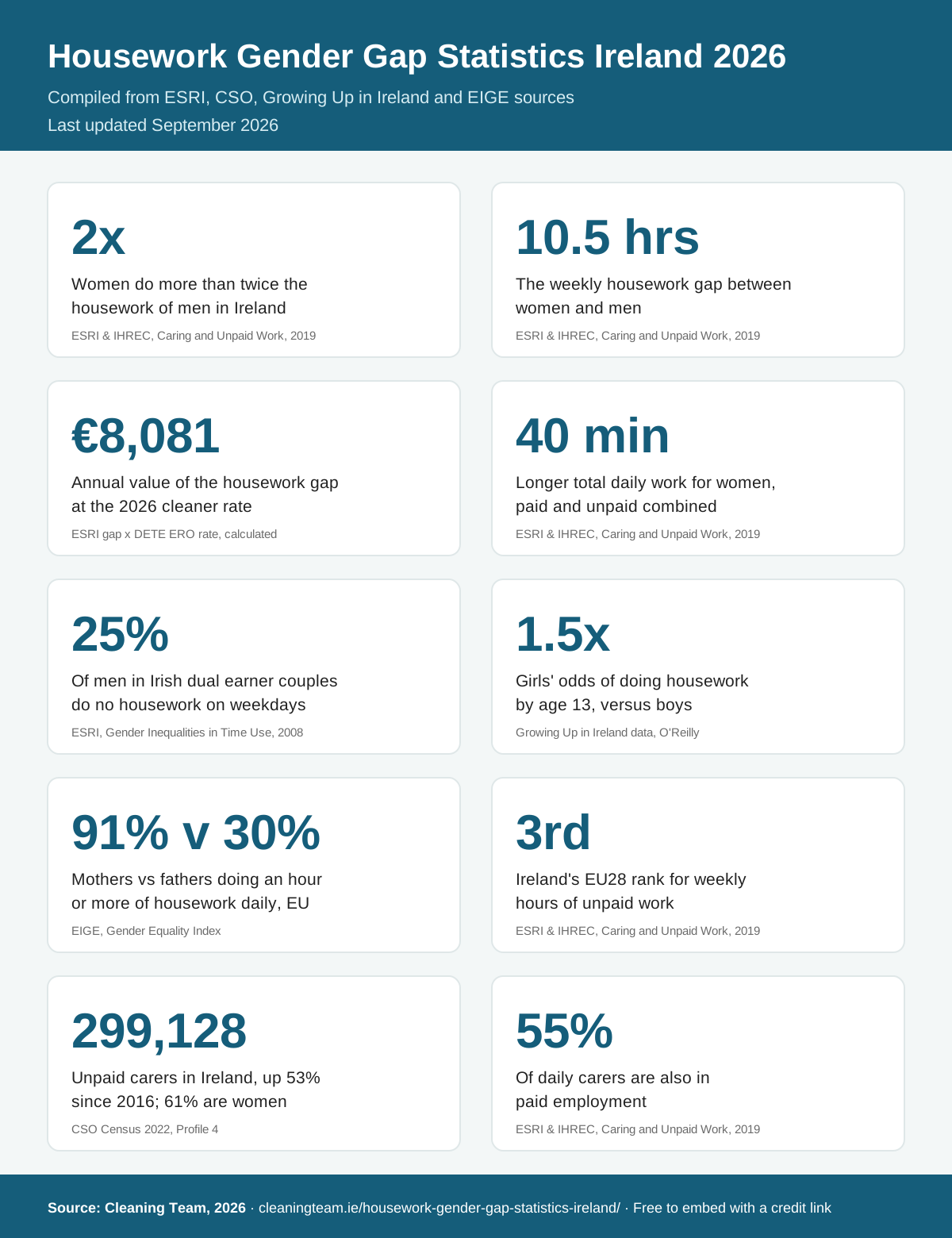
- Women in Ireland spend more than twice as much time on housework as men, and double the time on caring. Source: ESRI and IHREC, Caring and Unpaid Work in Ireland, 2019
- The housework gap is 10.5 hours a week, and the caring gap is almost 11 hours a week. Source: ESRI and IHREC, 2019
- At the 2026 contract cleaning rate of €14.80 an hour, the weekly housework gap is worth about €8,081 a year. Source: calculated from the ESRI gap and the Department of Enterprise ERO rate
- 45% of women provide care for others daily, compared with 29% of men. Source: ESRI and IHREC, 2019
- Ireland has the third highest weekly hours of unpaid work in the EU28, and the seventh highest gender gap in those hours. Source: ESRI and IHREC, 2019
- Counting paid work, unpaid work and travel together, women work about 40 minutes longer per day than men. Source: ESRI and IHREC, 2019
- By age 13, Irish girls' odds of doing some housework are 1.5 times higher than boys', and the gap widens between 9 and 13. Source: Growing Up in Ireland data, O'Reilly
- Across the EU, 91% of mothers spend at least an hour a day on housework, compared with 30% of fathers. Source: EIGE, Gender Equality Index
- Ireland has 299,128 unpaid carers, up 53% since 2016, and 61% of them are women. Source: CSO Census 2022, Profile 4
- The majority of people providing daily care, 55%, are also in paid employment. Source: ESRI and IHREC, 2019
The Headline Gap
The reference study for Ireland is Caring and Unpaid Work in Ireland, published by the ESRI and the Irish Human Rights and Equality Commission. Adults in Ireland average 14.5 hours of housework and 16 hours of caring a week, and women spend double the time of men on caring and more than twice as much time on housework, according to the ESRI and IHREC study. In hours, the housework gap is 10.5 hours a week and the care gap almost 11 hours, and 45% of women provide care daily against 29% of men. Added together, the average adult's 14.5 hours of housework and 16 hours of caring come to 30.5 hours of unpaid work a week, calculated from the study's two averages, which is most of a full time job before anyone is paid for anything.
Ireland's position in Europe makes the gap harder to dismiss as universal. Irish adults record the third highest weekly hours of unpaid work in the EU28, for both women and men, but the gap between the sexes is also the seventh highest in the union, per the same study. Irish households do more unpaid work than most of Europe, and divide it less equally. The study also found the gap persists even between men and women doing the same amount of paid work, which rules out the tidy explanation that it simply mirrors job hours.
What the Gap Is Worth
Housework has a market price, because you can hire it done. The statutory minimum for a contract cleaner is €14.80 per hour from 1 January 2026, per the Department of Enterprise, Tourism and Employment. Valued at that rate, the 10.5 hour weekly housework gap comes to €155.40 a week, or about €8,081 a year, calculated from the two figures. That is the annual transfer of unpaid labour inside an average Irish couple, priced at the legal minimum for the same work. The full valuation of all housework, €11,159 per adult per year, is on our cleaning and housework statistics for Ireland page. For scale against real prices, a professional deep clean of a three bedroom home costs €180 on our own price list, slightly more than one week of the priced gap, so the market cost of taking the work off a household is of the same order as the value of the labour it replaces.
The Double Shift
The gap does not come out of spare time. Counting paid work, unpaid work and travel together, women in Ireland work around 40 minutes longer per day than men, controlling for other factors, according to the ESRI and IHREC study. The majority of those providing unpaid care on a daily basis, 55%, are also in employment. The Census tells the same story from a different angle: 57% of Ireland's unpaid carers were at work in 2022, up from 51% in 2016, per the CSO Census 2022. For a large share of Irish women, the working day simply continues at home.
The second shift is visible in the workplace data too. Female workers in Ireland report work-related stress, depression or anxiety at 9.0 per 1,000 workers, more than double the male rate of 3.8, and report more work-related illness overall at 22.4 per 1,000 against 13.3, according to CSO data in the HSA Annual Review, figures covered in full on our workplace hygiene and injury statistics page. The research cannot say how much of that gap the double shift explains, but the two patterns sit side by side in the national data.
Where the Gap Starts: Children
The division of housework is learned young. Analysis of Growing Up in Ireland time use data found no difference between boys and girls at age 9, but by age 13 the odds of a child doing some housework were 1.5 times higher for girls, with girls doing more housework at 13 than they did at 9 and boys doing less, according to research on Growing Up in Ireland data by O'Reilly. The same national study recorded vacuuming and cleaning as the most widely performed household chore among nine year olds, per the CSO's Growing Up in Ireland Cohort '98 publication.
The pattern carries straight into early adulthood. Across the EU, 39% of young women aged 18 to 24 do at least an hour of daily cooking or housework, against 19% of young men, a 20 percentage point gap before most of them have set up a household of their own, according to EIGE's Gender Equality Index analysis.
Couples, Parenthood and the EU Picture
Parenthood is where the gap opens widest. Across the EU, about 91% of women with children spend at least an hour a day on housework, compared with 30% of men with children, a gap of 62 percentage points, the largest for any group EIGE measures, per the EIGE Gender Equality Index. Employment does not close it: employed women average 2.3 hours of housework daily against 1.6 hours for employed men.
| Group (EU, EIGE) | Women | Men |
|---|---|---|
| Parents doing 1+ hour of housework daily | 91% | 30% |
| Daily housework hours, employed adults | 2.3 | 1.6 |
| 18 to 24 year olds doing daily cooking or housework | 39% | 19% |
Inside Dual Earner Couples
The sharpest Irish numbers on couples come from the ESRI's earlier study of the 2005 Irish National Time Use Survey, Gender Inequalities in Time Use, which compared households where both partners are employed. Almost 60 per cent of men in dual earner couples in Ireland and Germany reported doing a quarter or less of the housework, and a quarter of men in Irish dual worker households reported doing no housework at all on weekdays, falling only slightly to 20 per cent at weekends, according to the ESRI report Gender Inequalities in Time Use (2008). The study placed Irish men at the bottom of the European league for sharing housework in dual earner couples, with Nordic couples the most equal. Both partners working full time, in other words, does not produce an equal cleaning rota; it mostly produces a tired second shift for one of them.
The tasks themselves are divided by type as well as by hours. The research literature summarised in the Growing Up in Ireland analysis notes that chores tend to be gender matched from childhood, with girls doing more of the routine indoor tasks such as washing dishes while boys take occasional outdoor jobs such as putting out the bins, and an earlier Irish study of teenagers found 84% describing their parents' own housework division as gendered, per the same Growing Up in Ireland research presentation. Routine daily tasks are exactly the ones a cleaning service takes over, which is why outsourcing removes hours from the gap rather than redistributing them.
Ireland's Unpaid Carers
Caring is the heavier half of unpaid work, and it is growing fast. Census 2022 counted 299,128 people providing regular unpaid personal help or care, a 53% increase on the 195,263 recorded in 2016, and 61% of them are women, according to the CSO Census 2022 Profile 4, Disability, Health and Carers. Nearly two thirds of carers are aged 40 to 64, and 4,759 of them are children under 15. Housework rides along with care: a household that gains a caring responsibility rarely sheds any of its cleaning.
Whether the Gap Is Closing
The Irish evidence says the gap is stubborn. The ESRI found that men's care and housework hours rose between 2007 and 2011, during the recession, and then returned to 2007 levels by 2016, suggesting the increase was a response to economic shock rather than an underlying shift in behaviour, per Caring and Unpaid Work in Ireland. Ireland has still never run a full national time use survey of the kind most EU states field, so the 2019 study remains the benchmark, and this page will be updated the day the CSO publishes one.
Method and Sources
Every statistic on this page was verified against its named source on 30 September 2026. The sources are the ESRI and IHREC report Caring and Unpaid Work in Ireland (2019) for the Irish time use figures, the ESRI report Gender Inequalities in Time Use (2008) for the dual earner couple findings from the 2005 Irish National Time Use Survey, Growing Up in Ireland research published on growingup.gov.ie for the children's data, the CSO Census 2022 Profile 4 for carer numbers, the CSO's Growing Up in Ireland Cohort '98 publication, EIGE's Gender Equality Index analysis for the EU comparisons (based on 2016 EU survey data), and the Department of Enterprise, Tourism and Employment for the statutory cleaning rate used in the valuation. Two figures are calculated and labelled in the text: the €155.40 weekly and €8,081 annual value of the 10.5 hour housework gap. Sibling statistics pages cover cleaning and housework overall, rental deposits, cleaning product safety and workplace hygiene.
How Cleaning Team Helps
The fastest way to close a 10.5 hour weekly gap is to take the hours off both people. Cleaning Team provides professional house cleaning and deep cleaning across Dublin, Kildare, Meath and Wicklow, from weekly visits to one off resets. For less than the calculated value of the gap, a household buys back its weekend from the argument the research says nobody is winning. Contact us for a quote or book online in a few minutes.