Winter Illness and Home Hygiene Statistics Ireland 2026: Flu, RSV and Norovirus
Last updated: October 2026. Human compiled and fact checked against each named source.
Every Irish winter runs on the same grim timetable: flu peaks around Christmas, RSV fills the children's wards, and norovirus sweeps through in the new year. The numbers behind that timetable are published weekly by the HPSC and almost never collected in one place. This page gathers the key Irish figures on winter illness and the hygiene that limits it: how many people were infected, hospitalised and lost last season, where outbreaks actually happen, and what the official prevention advice says. Every figure links to its primary source, and anything we derived is labelled as calculated.
Key Winter Illness Statistics for Ireland at a Glance
- Ireland recorded 37,645 laboratory-confirmed cases of flu, RSV and COVID-19 in the 2025/2026 winter season. Source: HPSC Integrated Respiratory Virus Bulletin, week 20 2026
- Influenza alone accounted for 24,948 confirmed cases, 5,935 hospitalisations, 183 ICU admissions and 301 deaths. Source: HPSC, week 20 2026 bulletin
- More than one confirmed case in four, 10,322 of 37,645, ended up in hospital, calculated from the same bulletin. Source: HPSC
- Flu activity peaked in weeks 50 and 51 of 2025, the fortnight before Christmas. Source: HPSC
- RSV put 2,718 people in hospital, and babies under 1 were hospitalised with it at a rate of 853 per 100,000. Source: HPSC
- 913 respiratory outbreaks were reported over the season, and 906 of them, 99%, were in healthcare settings: 432 in nursing homes and 286 in hospitals. Source: HPSC
- Norovirus cases jumped 54% in a single February week, and 59% of that week's cases were people aged 65 or older. Source: HSE and HPSC data reported by RTÉ, February 2026
- The HSE's norovirus advice is to stay home for 48 hours after symptoms end, wash hands with soap and water, and clean contaminated surfaces with bleach-based cleaners. Source: HSE guidance via RTÉ
- Work-related illness already costs Ireland 1.33 million lost days a year, before any bad flu season is counted. Source: CSO data in the HSA Annual Review
- Children aged 1 to 4 were confirmed infected at 2,570 per 100,000, three and a half times the general rate, calculated from the HPSC bulletin. Source: HPSC
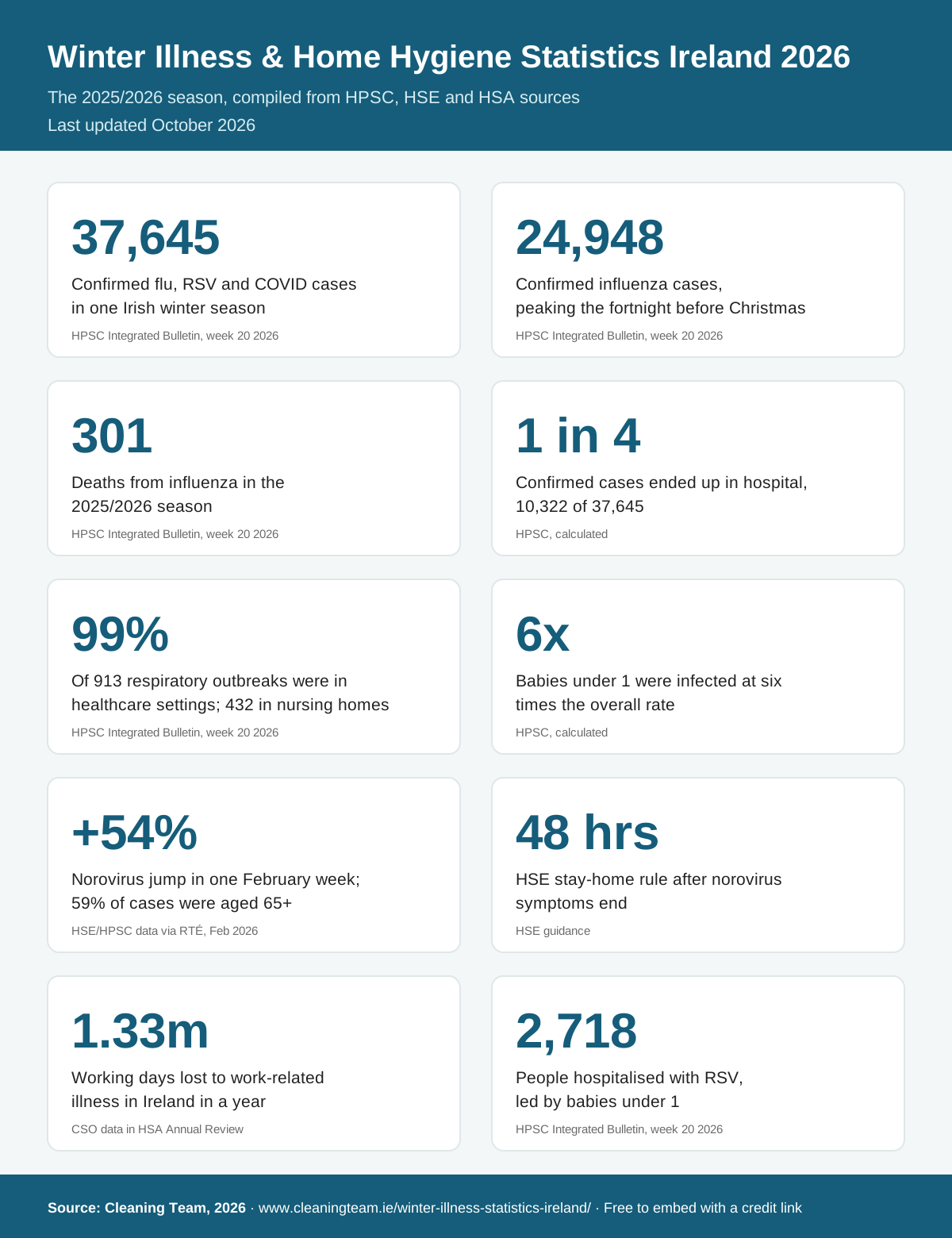
Last Winter by the Numbers
The HPSC tracks the three main respiratory viruses through one integrated weekly bulletin, and the season-end edition is the closest thing Ireland has to a winter scorecard. Between week 40 of 2025 and week 20 of 2026, Ireland recorded 37,645 laboratory-confirmed cases of COVID-19, influenza and RSV combined, of whom 10,322 were hospitalised, according to the HPSC Integrated Respiratory Virus Bulletin for week 20 2026. That is more than one confirmed case in four ending up in a hospital bed, calculated from the two totals, a reminder that the surveillance figures capture the serious end of what circulates far more widely in homes, schools and workplaces.
COVID-19 has settled into third place in the winter league but has not left it: 4,678 confirmed cases, 1,669 hospitalisations, 29 ICU admissions and 95 deaths over the season, per the same bulletin. The season also has a geography. Confirmed infection rates ran highest in the West and North West region at 821 per 100,000 and lower in the Mid West at 654, from the bulletin's regional table, so the pressure on local hospitals and nursing homes varies meaningfully by county even within one national season.
The timetable is consistent enough to plan around. Flu built through November, peaked in the fortnight before Christmas and faded by spring; RSV ran hardest in the same early-winter window, dominated by infants; and norovirus built later, still circulating at very high levels into March and April. A household or facility that times its prevention effort, vaccination, ventilation and surface hygiene, to October and November is ahead of all three curves.
| 2025/2026 season | Confirmed cases | Hospitalised | ICU | Deaths |
|---|---|---|---|---|
| Influenza | 24,948 | 5,935 | 183 | 301 |
| RSV | 8,019 | 2,718 | 91 | 47 |
| COVID-19 | 4,678 | 1,669 | 29 | 95 |
| Total | 37,645 | 10,322 | 303 | 443 |
Source: notified laboratory-confirmed cases, week 40 2025 to week 20 2026, HPSC. Totals calculated by addition.
Flu: the Christmas Virus
Influenza was last winter's dominant illness by every measure: 24,948 confirmed cases, 5,935 hospitalisations, 183 intensive care admissions and 301 deaths, with influenza A(H3) accounting for the majority of subtyped viruses, per the HPSC bulletin. The timing is the operationally useful part: flu activity peaked in weeks 50 and 51 of 2025, the two weeks before Christmas, exactly when households host the most visitors and workplaces hold their busiest gatherings. Flu incidence was highest in those under 1 and over 80, the two groups least able to carry it.
The defence calendar matches the threat calendar. The HSE's 2026/2027 flu vaccination programme began in early October, with the vaccine free for everyone aged 60 and over, for children aged 2 to 17 as a nasal spray, for pregnant women, healthcare workers and people with long-term conditions, per the HSE's flu programme. With the peak reliably landing in mid December, October and November are the vaccination window that counts.
RSV and the Youngest
RSV reads like a children's statistic wearing an adult name. Of its 8,019 confirmed cases, 1,305 were babies under 1, who were infected at a rate of 2,258 per 100,000 and hospitalised with RSV at 853 per 100,000, according to the same HPSC data. Across all three viruses, children aged 1 to 4 were confirmed infected at 2,570 per 100,000, roughly three and a half times the overall rate of 731, and babies under 1 at 4,322 per 100,000, almost six times the overall rate, both calculated from the bulletin's age table. Small children are the season's main carriers and among its main casualties, which is why creche and household hygiene carry more weight than their size suggests.
Norovirus: the Winter Vomiting Bug
Norovirus runs on a different calendar, building through winter and peaking in spring. In the week ending 7 February 2026 alone, confirmed cases jumped 54% to 86, with 676 cases recorded since the season began in late September, and 59% of that week's cases were people aged 65 and older, according to HSE and HPSC figures reported by RTÉ. By March the HPSC described norovirus as circulating at very high levels. Confirmed cases are the tip of it: most people never get tested, and the HSE notes the illness is mild for many but serious for older adults, young children and anyone with underlying conditions.
The official hygiene advice is specific and worth quoting in a cleaning context: stay home from work, school and socialising for 48 hours after symptoms stop, wash hands frequently with soap and water, and clean contaminated surfaces and objects with bleach-based cleaners, per the HSE guidance. Alcohol gel alone does not reliably kill norovirus, which is why the advice names soap and bleach. Bleach has its own safety record worth knowing before a deep clean: it is one of only two household products in Ireland's top 10 poisoning agents, covered on our cleaning product safety statistics page.
Where Outbreaks Happen
The outbreak map is brutally concentrated. Of the 913 respiratory outbreaks reported over the season, 906, or 99%, occurred in healthcare settings: 432 in nursing homes, 286 in hospitals, 104 in residential institutions and 70 in community hospitals and long-stay units, against just 6 recorded outside healthcare entirely, per the HPSC outbreak table. The caveat matters: households and workplaces do not report outbreaks to the surveillance system, so the figures measure where outbreaks are counted, not only where they occur. What they establish beyond argument is that the settings housing Ireland's most vulnerable people run the highest outbreak stakes, and that hygiene standards there are clinical infrastructure rather than housekeeping.
The same concentration is why the HSE's advice to anyone with norovirus includes avoiding visits to hospitals and care homes entirely while ill. A visitor carrying the winter vomiting bug into a nursing home walks it past every control the setting has paid for, and 59% of confirmed norovirus cases in the February peak week were people aged 65 and over, the group those settings exist to protect.
What Winter Illness Costs in Lost Time
Illness is already the larger half of Ireland's absence bill: 1.33 million working days are lost to work-related illness in a year, nearly twice the days lost to injury, according to CSO data in the HSA Annual Review, and every certified sick day now carries a statutory cost of up to €110 for the employer. The full absence and sick pay picture, including the sector rates, is on our workplace hygiene and injury statistics page. A winter with 24,948 confirmed flu cases sits on top of those baselines, and the 48-hour norovirus exclusion rule alone turns one infected employee into a guaranteed two-day absence.
Hygiene That Works
The prevention picture from the official guidance is unglamorous and consistent: soap and water for hands, bleach-based products for contaminated surfaces, exclusion periods honoured in full, and ventilation through the months when people spend up to 90% of their day indoors. Shared touch points, kitchens and bathrooms do the spreading in homes and offices alike, which is why both our winter deep cleans and scheduled commercial cleaning concentrate on exactly those surfaces. The indoor environment side of winter, damp, mould and the air itself, has its own page of figures in our mould, damp and indoor air statistics for Ireland.
Method and Sources
Every statistic on this page was verified against its named source on 6 October 2026. The respiratory season figures come from the HPSC Integrated Respiratory Virus Bulletin for week 20 2026, the final cumulative bulletin of the 2025/2026 season, read in full from the HPSC's published file; the norovirus figures from HSE and HPSC data reported by RTÉ in February 2026; the lost-time baseline from CSO data in the HSA Annual Review 2023-2024. Calculated figures are labelled in the text: the one-in-four hospitalisation share, the age-rate multiples for infants and small children, and the scorecard totals. The HPSC publishes its bulletin weekly from October; this page will be refreshed as the 2026/2027 season develops and when its end-of-season bulletin appears in May.
How Cleaning Team Helps
Cleaning Team provides winter-ready deep cleaning for homes and scheduled commercial cleaning for offices and premises across Dublin, Kildare, Meath and Wicklow, with sanitisation of the touch points the guidance above names. After a household bout of flu or norovirus, a professional reset of bathrooms, kitchens and handles is the shortest route back to a safe baseline. Contact us for a quote or book online in a few minutes.