Mould, Damp and Indoor Air Statistics Ireland 2026: Homes, Renters and Health
Last updated: October 2026. Human compiled and fact checked against each named source.
Damp is Ireland's quietest housing problem: more than one in five people now live with a leaking roof, damp walls or rot, the EU statistics say, and every autumn the condensation season makes it worse. This page gathers the key Irish figures on mould, damp and indoor air in one place: how many homes are affected, who lives in them, what renters report, what inspections find, and what the air indoors does to health. Every figure links to its primary source, and anything we derived is labelled as calculated. Journalists, renters and researchers are welcome to cite any statistic here with a link back to this page as the reference.
Key Mould and Damp Statistics for Ireland at a Glance
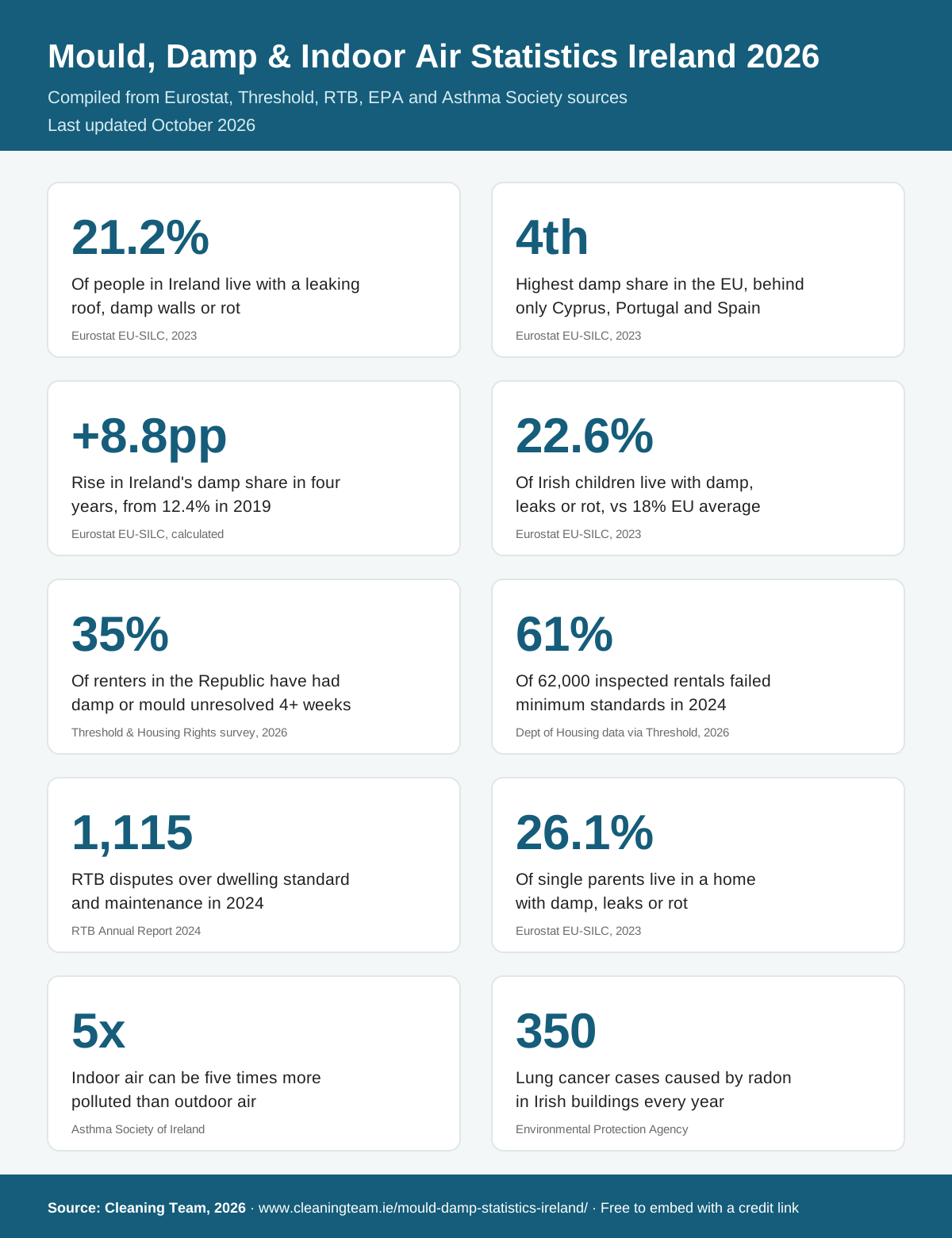
- 21.2% of people in Ireland live in a dwelling with a leaking roof, damp walls, floors or foundation, or rot, against an EU average of 15.6%. Source: Eurostat EU-SILC, 2023
- That share has jumped from 12.4% in 2019, a rise of 8.8 percentage points in four years, calculated from the same dataset. Source: Eurostat EU-SILC
- Children fare worst: 22.6% of under 18s in Ireland live with damp, leaks or rot, against 18% across the EU. Source: Eurostat EU-SILC, 2023
- 35% of renters in the Republic have had damp or mould in their home as an unresolved issue for four weeks or more, the most common standards problem renters report. Source: Threshold and Housing Rights all-island survey, 2026
- Local authorities inspected over 62,000 private rental properties in 2024 and 61% failed minimum standards on first inspection. Source: Department of Housing data cited in the Threshold survey
- Disputes over the standard and maintenance of a dwelling reached 1,115 at the RTB in 2024, 12% of all cases and rising. Source: RTB Annual Report 2024
- Indoor air can be up to five times more polluted than the air outside, and people spend up to 90% of their winter days indoors. Source: Asthma Society of Ireland
- Radon in buildings causes about 350 cases of lung cancer in Ireland every year, the second biggest cause after smoking. Source: Environmental Protection Agency
- Half of renting households earning €20,000 to €30,000 report damp or mould, and even among renters earning over €80,000 the figure is 25%. Source: Threshold and Housing Rights, 2026
- People in Ireland below the poverty line are the most exposed of all, with 24.6% living with damp, leaks or rot. Source: Eurostat EU-SILC, 2023
How Many Irish Homes Have Damp
The EU's household survey asks the same question in every member state: does your dwelling have a leaking roof, damp walls, floors or foundation, or rot in window frames or floors. In Ireland, 21.2% of the population answered yes in 2023, more than one person in five, against an EU average of 15.6%, according to Eurostat's EU-SILC indicator ilc_mdho01, which is collected in Ireland by the CSO.
The direction of travel is the alarming part. Ireland sat below the EU average for most of the last decade, at 11.9% in 2018 and 12.4% in 2019. The share then climbed to 16.3% in 2020 and 21.2% in 2023, a rise of 8.8 percentage points in four years, calculated from the same dataset, while the EU average barely moved. Ireland has gone from drier than average to one of the dampest housing stocks in western Europe in half a decade.
Ranked against the rest of the union, Ireland's 21.2% is the fourth highest share in the EU, behind only Cyprus at 32.1%, Portugal at 29% and Spain at 23%, and a fraction ahead of France at 21.1%, per the same Eurostat dataset. The contrast with northern Europe is stark: Finland records 5.3% and Sweden 4.8%, in climates with longer and colder winters than ours. Irish damp is a housing stock and ventilation outcome, not a weather sentence.
| Year | Ireland | EU average |
|---|---|---|
| 2016 | 13.3% | 15.2% |
| 2018 | 11.9% | 13.6% |
| 2019 | 12.4% | 12.7% |
| 2020 | 16.3% | 14.8% |
| 2023 | 21.2% | 15.6% |
Source: population living in a dwelling with a leaking roof, damp walls, floors or foundation, or rot, Eurostat EU-SILC.
Who Lives With Damp
Damp is not evenly distributed. Children are the most exposed age group, with 22.6% of under 18s in Ireland living in a dwelling with damp, leaks or rot in 2023, against an EU average of 18%, while 16.1% of over 65s are affected, per the same Eurostat dataset. Income cuts the other way: among people below the at-risk-of-poverty line the share rises to 24.6%, almost one in four. The households least able to pay for heat, ventilation upgrades or professional help are the ones living with the most damp.
Household type sharpens the picture further. Single parents are the most exposed household in Ireland, with 26.1% living in a dwelling with damp, leaks or rot, compared with 22.5% of all households with dependent children and 19.3% of households without children, per the same Eurostat dataset. A single adult running a home alone has the least spare time for ventilation routines and the least spare income for repairs, and the damp data shows exactly that. For the time dimension of running a home alone, our housework gender gap statistics page carries the unpaid work figures.
Renters, Inspections and Disputes
Rented homes are where Ireland's damp concentrates. 35% of renters in the Republic report damp or mould in their home as an unresolved issue of four weeks or longer, the single most common standards problem in the sector, rising to 40% among city renters, 42% among 18 to 34 year olds, and 50% among households earning €20,000 to €30,000, according to the all-island survey of private renters by Threshold and Housing Rights, January 2026. Money is limited protection: even among renters earning over €80,000, a quarter report damp or mould. Overall, 64% of Republic of Ireland renters report at least one unresolved standards issue lasting a month or more. The all-island comparison underlines that this is not inevitable: in Northern Ireland, with much the same climate, damp or mould affects 22% of rental homes, thirteen percentage points below the Republic's figure, per the same survey.
The enforcement data points the same direction. Local authorities inspected over 62,000 private rental properties in 2024, and 61% failed to meet minimum standards on first inspection, per Department of Housing figures cited in the same survey. At the RTB, disputes over the standard and maintenance of a dwelling, the category where damp and mould complaints land, reached 1,115 applications in 2024, 12% of all disputes and up from 767 cases and a 10% share in 2022, according to the RTB Annual Report 2024. Renters facing a deposit argument over mould at the end of a tenancy will find the dispute and refund figures on our rental deposit statistics for Ireland page.
Indoor Air and Health
Damp is an air quality problem as much as a surface problem. Indoor air can be up to five times more polluted than the air outside, and in winter people spend up to 90% of their days indoors, according to the Asthma Society of Ireland, which lists mould spores, house dust mites and dust among the most common asthma triggers found in the home. Mould releases spores wherever humidity is high, which in an Irish winter means bathrooms, kitchens, bedroom windows and anywhere washing dries indoors.
The most serious indoor air risk in Irish homes is one you cannot see or smell at all. Radon, a naturally occurring radioactive gas that seeps into buildings from the ground, causes about 350 cases of lung cancer in Ireland every year and is the second biggest cause of lung cancer after smoking, according to the Environmental Protection Agency. Radon accounts for roughly 60% of the average radiation dose an Irish resident receives, the national reference level is 200 becquerels per cubic metre, and the EPA's advice is a simple postal test kit. No amount of cleaning touches radon, which is exactly why a statistics page about indoor air should say so.
Dust mites complete the indoor trio. The Asthma Society lists house dust mites among the most common home triggers, with the tell-tale signs being wheezing while vacuuming or in dusty rooms and asthma symptoms at night or first thing in the morning. Damp homes favour mites as well as mould, because both thrive in the same humid air, which is why the damp statistics above are respiratory health statistics wearing different clothes.
Condensation Season
Irish damp peaks in the months when heating goes on and windows stay shut. Condensation forms where warm moist air meets cold surfaces, and the household response determines whether it becomes mould: ventilation and heat address the cause, while cleaning controls the growth that has already happened. The Asthma Society's trigger guidance names damp clothing alongside bathrooms and kitchens as a source of mould spores, which makes washing dried indoors on radiators, a fixture of the Irish winter, part of the problem in homes that already measure damp. Given that 90% of winter days are spent indoors, the air those habits create is the air households breathe almost all the time. What circulates in that air each winter, from flu to norovirus, is counted on our winter illness statistics for Ireland page. One safety note belongs beside that: bleach, the default Irish answer to black mould, is sodium hypochlorite, one of only two household products in the national top 10 poisoning agents, so ventilate while treating mould and never mix bleach with anything else, figures and detail on our cleaning product safety statistics for Ireland page. The broader picture of who does this work, and the 14.5 hours a week Irish adults already spend on housework, is on our cleaning and housework statistics page.
Method and Sources
Every statistic on this page was verified against its named source on 6 October 2026. The sources are Eurostat's EU-SILC indicator ilc_mdho01, queried directly from the Eurostat API, for the population shares living with damp, leaks or rot; the Threshold and Housing Rights all-island survey of private renters published January 2026, read in full, which also carries the Department of Housing inspection figures; the RTB Annual Report 2024 for dispute categories; the Environmental Protection Agency for radon; and the Asthma Society of Ireland for indoor air and triggers. One figure is calculated and labelled: the 8.8 percentage point rise in Ireland's damp share between 2019 and 2023. This page will be refreshed when Eurostat publishes the next EU-SILC housing quality wave, which is collected on a rolling module and published roughly every three years, when the RTB's 2025 Annual Report appears, and when the Department of Housing publishes its next private rented inspections data. The Eurostat figures are shares of population rather than dwellings, which is why the text says people rather than homes. Sibling pages cover cleaning and housework, rental deposits, cleaning product safety, workplace hygiene and the housework gender gap.
How Cleaning Team Helps
Professional cleaning controls mould growth and removes the dust, spores and residues that make damp rooms unhealthy, and a deep clean is the right reset for a bathroom or bedroom where condensation has got ahead of the routine. We are straight about the limits: cleaning treats the symptom, and persistent damp needs its cause fixed through ventilation, heating or repairs. For the rooms moisture hits hardest, our regular house cleaning keeps the growth from returning between visits. Contact us for a quote or book online in a few minutes.