Household Waste and Recycling Statistics Ireland 2026: Bins, Food and Targets
Last updated: October 2026. Human compiled and fact checked against each named source.
Ireland's bins tell an awkward story: we generate over three million tonnes of municipal waste a year, recycle less than half of it, and have been stuck at roughly the same rate for a decade while EU targets move further away. This page gathers the key Irish figures on household waste and recycling in one place: how much we produce, what is actually in the bins, what food waste costs a household, and how far the country sits from its targets. Every figure links to its primary source, and anything we derived is labelled as calculated. Journalists, teachers and researchers are welcome to cite any statistic here with a link back to this page as the reference.
Key Household Waste Statistics for Ireland at a Glance
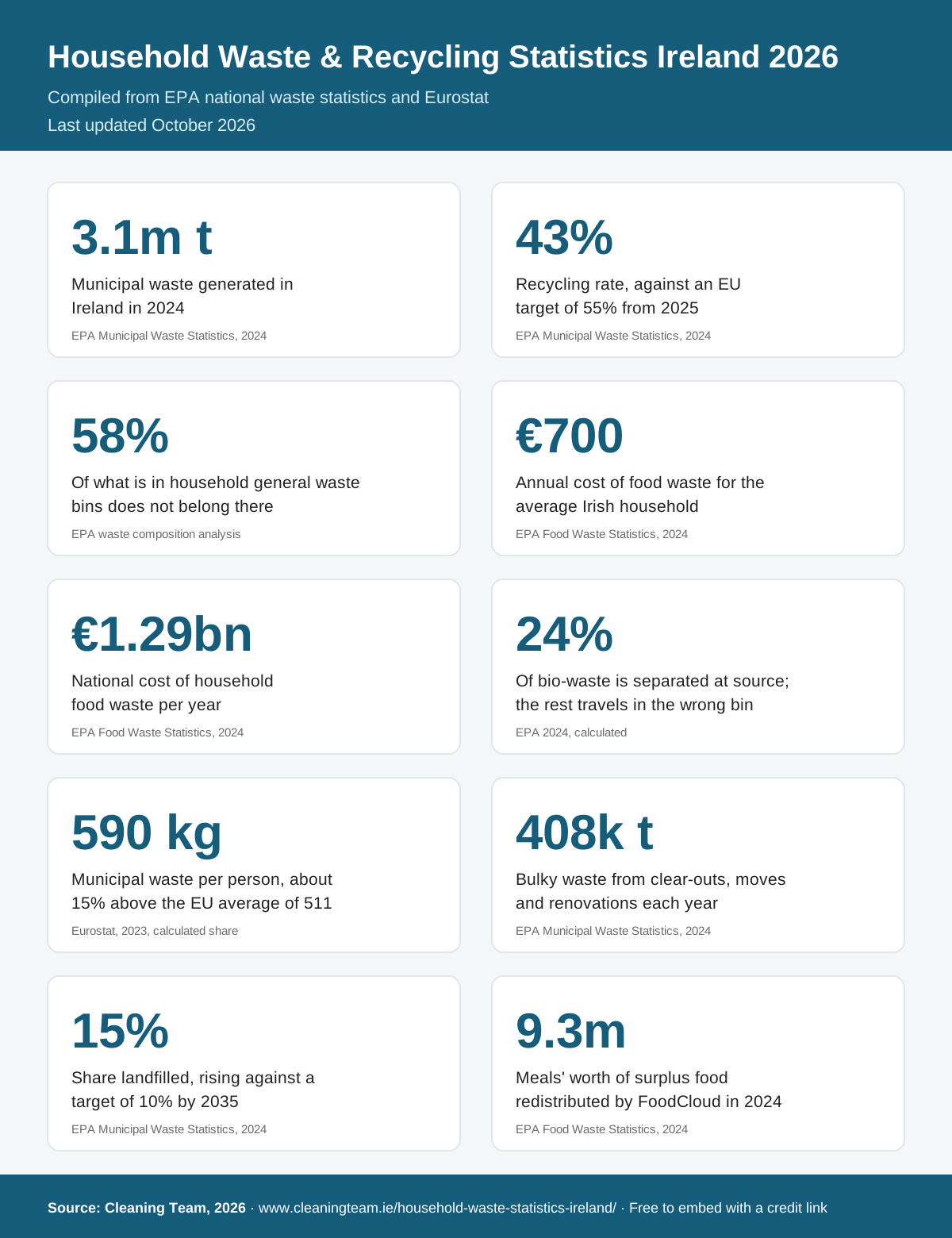
- Ireland generated 3,108,749 tonnes of municipal waste in 2024, nearly unchanged from 2023. Source: EPA Municipal Waste Statistics, 2024 provisional
- That is roughly 578 kg of waste per person, calculated from the EPA tonnage and the 5.38 million population it cites. Source: EPA, calculated
- The recycling rate is 43%, against an EU target of 55% that applied from 2025, and the EPA forecasts Ireland will miss it. Source: EPA, 2024
- Ireland would need to recycle 388,000 additional tonnes a year to reach the target. Source: EPA, 2024
- 58% of what Irish households put in their general waste bin is material that does not belong there. Source: EPA waste composition analysis
- Food waste costs the average Irish household about €60 a month, around €700 a year, and €1.29 billion nationally. Source: EPA Food Waste Statistics, 2024
- Households produced 219,000 tonnes of food waste, 31% of Ireland's 708,000 tonne total, about 41 kg per person. Source: EPA, 2024
- 41% of Ireland's municipal waste is burned for energy and 15% is landfilled, with the landfill share rising, not falling. Source: EPA, 2024
- 37% of Irish municipal waste is exported for treatment abroad. Source: EPA, 2024
- Bulky waste, the skips and clear-outs stream, came to 408,004 tonnes, and discarded textiles to another 164,440 tonnes. Source: EPA, 2024
How Much Waste Ireland Produces
Ireland generated 3,108,749 tonnes of municipal waste in 2024, essentially flat on the 3,134,839 tonnes of 2023 but 340,706 tonnes more than in 2017, according to the EPA's provisional Municipal Waste Statistics for 2024. Spread across the 5.38 million population the EPA cites, that is roughly 578 kg per person per year, calculated from the two figures, though the EPA notes per-person generation has generally declined since 2017 as population growth outpaced waste growth.
The material streams are a portrait of household life: 685,356 tonnes of paper and cardboard, 657,869 tonnes of bio-waste, 345,721 tonnes of plastic, 179,768 tonnes of glass and 121,384 tonnes of metals. Two streams deserve particular notice. Bulky waste, the furniture, mattresses and clear-out loads that follow every move and renovation, came to 408,004 tonnes, and discarded textiles to 164,440 tonnes, together more than half a million tonnes of what are essentially emptied rooms.
Ireland is also a heavier producer than most of Europe. On Eurostat's harmonised measure, Ireland generated 590 kg of municipal waste per person in 2023 against an EU average of 511 kg, about 15% above the average, calculated from the two figures, though the Irish number has been falling steadily from 637 kg in 2020, according to Eurostat's municipal waste dataset. Ireland throws away more per head than the EU average and recycles a smaller share of it, which is the whole national problem in one sentence.
The Recycling Rate That Will Not Move
Ireland recycled 43% of its municipal waste in 2024, 1.32 million tonnes split between 828,427 tonnes of material recycling and 493,537 tonnes of composting and anaerobic digestion, per the EPA. The EU recycling target that applied from 2025 is 55%, leaving a 12 percentage point gap that the EPA says cannot be bridged without targeted interventions, and which translates into 388,000 additional tonnes that would need to move from the other bins into recycling every year. The agency describes the 2030 targets as challenging, which in regulator language is a forecast.
| Where Ireland's municipal waste went, 2024 | Tonnes | Share of waste managed |
|---|---|---|
| Energy recovery (incineration) | 1,278,279 | 41% |
| Material recycling | 828,427 | 43% combined with composting |
| Composting and anaerobic digestion | 493,537 | (part of the 43%) |
| Landfill | 473,121 | 15% |
Source: EPA Municipal Waste Statistics, 2024 provisional. Landfill is moving the wrong way, up from 14% in 2023 to 15% in 2024, against a target of 10% by 2035. Ireland also exported 37% of its municipal waste for treatment abroad in 2024, down from 41%, with 626,734 tonnes of the exports going to recycling.
What Is Actually in Irish Bins
The EPA's waste characterisation work explains why the recycling rate is stuck, and it is a sorting problem before it is an infrastructure problem. In household general waste bins, 58% of the contents were non-target materials, things that belonged in the recycling, organic or other streams instead, per the EPA's composition analysis. The household waste profile overall runs at about 28% organic waste, 21% paper and cardboard and 17% plastics. Put plainly: more than half of what Irish households throw in the black bin should never have been there, and every misplaced item is paid for twice, once in collection charges and once in the national recycling gap.
The organic stream shows the same failure most clearly. Of the 657,869 tonnes of bio-waste in the municipal stream, only 158,778 tonnes were separated and recycled at source, which is 24%, calculated from the EPA's stream table. Three quarters of Ireland's compostable waste is travelling in the wrong bin. Small streams tell their own stories: 68,361 tonnes of electrical and electronic equipment and 1,641 tonnes of batteries entered the municipal stream, and batteries in general waste are not a sorting nicety but a fire risk at every stage of collection.
Business bins are worse again. In non-household waste, 73% was managed as mixed residual waste against just 18% in mixed dry recycling, and organic waste was the largest single component at 32.8% of the total, with about 70% of that organic material still sitting in general waste bins, per the same EPA characterisation. For offices, restaurants and retail premises, bin segregation is one of the few sustainability measures that is simultaneously a legal expectation, a cost saving and a cleaning standard, and it is covered in every serious facilities specification alongside the hygiene measures on our workplace hygiene statistics page.
Food Waste: the €700 Household Bill
Ireland generated 708,000 tonnes of food waste in 2024, which is 132 kg per person against an EU average of 130 kg, according to the EPA's Food Waste Statistics, published in July 2026. Households are the single largest source at 219,000 tonnes, 31% of the total, which works out at about 119 kg per household and 41 kg per person. The EPA puts the cost at roughly €60 per household per month, about €700 a year, and €1.29 billion nationally, which makes the kitchen bin one of the most expensive containers in the house.
The rest of the chain contributes the balance: restaurants and food services 181,000 tonnes, manufacturing and processing 169,000 tonnes, retail and distribution 85,000 tonnes and primary production 54,000 tonnes. In supermarkets, 2019 research found vegetables (20%), fruit (16%), bread (15%) and meat (11%) the most wasted categories. Redistribution shows what the alternative looks like: FoodCloud moved 3,895 tonnes of surplus food from 195 food businesses to 674 community organisations in 2024, the equivalent of about 9.3 million meals and an estimated saving of 12,467 tonnes of CO2, per the same EPA page.
One honesty note the headlines usually skip: the EPA revised how manufacturing food waste is measured in 2024, removing non-waste animal by-products from the count, which cut that sector's figure from an estimated 304,000 tonnes under the old method to 169,000 tonnes under the new one. The EPA states plainly that this is a measurement change, not a real reduction, and this page follows that framing: the household figures, where the real money is, are unaffected by the revision.
The Targets and the Gap
The scoreboard Ireland is playing against is explicit. Municipal recycling of 55% applied from 2025 and the EPA forecasts a miss; the 2030 recycling target is higher again and rated challenging; municipal landfill must fall to 10% by 2035 and is currently rising; and under proposed EU amendments, food waste from households, retail and food service must fall 30% by 2030 against a national household figure that fell just 2% in the last measured year, all per the EPA's municipal and food waste statistics. None of those curves bends without what happens in individual kitchens and bin stores changing first.
Clear-Outs, Renovations and Bulky Waste
The 408,004 tonnes of bulky waste is the stream closest to our own work, because it is generated in bursts: end of tenancy clear-outs, renovations, bereavements and moves. A renovation that fills a skip also fills the house with dust, which is why after builders cleaning exists as its own discipline, and our guide to the post-construction cleaning checklist covers the sequence. The moving side of the same story, deposits included, is on our rental deposit statistics page. And because a cleaner bin is a better-sorted bin, the washing-up rule applies: rinsed packaging recycles, contaminated packaging becomes part of the 58%.
Method and Sources
Every statistic on this page was verified against its named source on 13 October 2026. The sources are the EPA's National Waste Statistics for municipal waste (2024 provisional figures, subject to validation before Eurostat reporting) and for food waste (2024 figures published July 2026), including the EPA's waste characterisation analysis for bin composition. Two figures are calculated and labelled in the text: the roughly 578 kg of municipal waste per person, derived from the EPA's 2024 tonnage and its cited population of 5.38 million, and the combined bulky-plus-textiles total. The EPA updates these statistics annually; this page will be refreshed when the 2025 data and the next waste characterisation study publish. Sibling pages cover cleaning and housework, mould and damp and winter illness.
How Cleaning Team Helps
Cleaning Team is the crew that arrives after the skip leaves: professional after builders cleaning when a renovation wraps, and deep cleaning when a clear-out, move or estate clean leaves a house empty but far from fresh. We clean the property rather than haul the waste, and we are straight about that line. Contact us for a quote or book online in a few minutes.